
- Introduction
- 1. Shirakawa-go — Gifu
- 2. Ine — Kyoto
- 3. Miyama — Kyoto
- 4. Ouchi-juku — Fukushima
- 5. Tsumago-juku — Nagano
- 6. Magome-juku — Gifu
- 7. Ainokura — Toyama
- 8. Taketomi Island — Okinawa
- 9. Hoshino Village — Fukuoka
- 10. Narai-juku — Nagano
- Which Hidden Village Should You Visit?
- Best Time to Visit Japan’s Traditional Villages
- How to Visit Hidden Villages in Japan
- FAQ
- Final Thoughts: Discover Rural Japan
Introduction
Japan is famous for Tokyo, Kyoto, and Osaka, but some of the country’s most unforgettable places are found far beyond the major cities.
Hidden among mountains, valleys, and quiet coastlines are traditional villages where historic wooden houses, thatched roofs, old streets, and local ways of life still remain.
These places offer a completely different side of Japan — slower, quieter, and deeply connected to the country’s history and landscape.
If you want to discover Japan beyond the usual tourist trail, here are 10 beautiful traditional villages and historic towns worth adding to your itinerary.
1. Shirakawa-go — Gifu
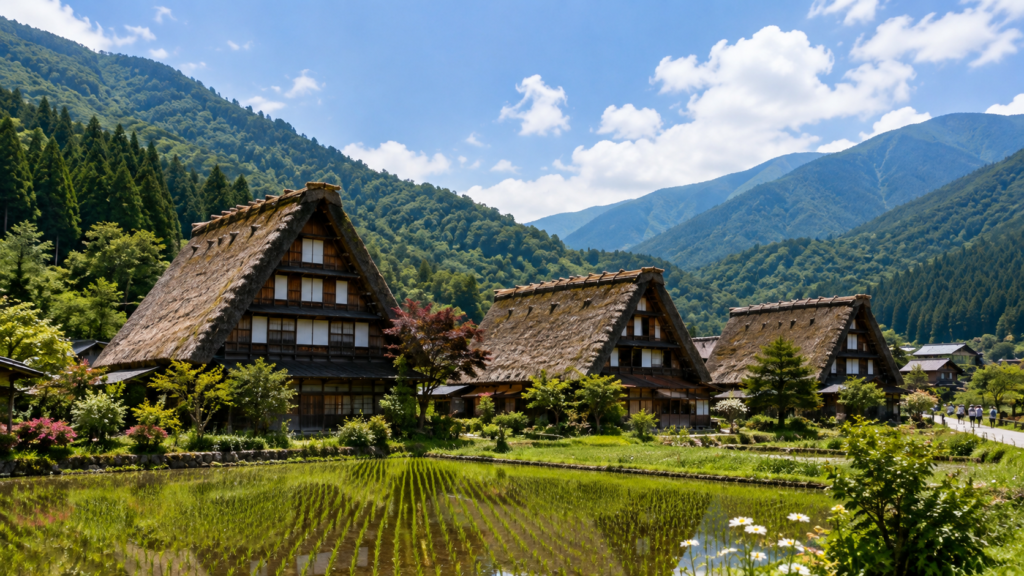
Hidden deep in the mountains of Gifu Prefecture, Shirakawa-go is one of Japan’s most famous traditional villages.
The village is known for its distinctive gassho-zukuri farmhouses, whose steep thatched roofs were designed to withstand the region’s heavy winter snowfall.
Surrounded by mountains, rice fields, and seasonal scenery, Shirakawa-go feels completely different throughout the year.
Green landscapes dominate summer, autumn brings colorful foliage, and winter transforms the village into a snow-covered scene.
For one of the best views, head to the observation area overlooking the village of Ogimachi.
Best for: Traditional architecture and mountain scenery
Best season: Winter and autumn
Hidden Japan pick: ★★★★★
Planning to visit Shirakawa-go?
Explore Shirakawa-go, Gokayama, and historic Takayama on a convenient day trip from Kanazawa.
👉 Check the Shirakawa-go & Gokayama Day Tour
2. Ine — Kyoto
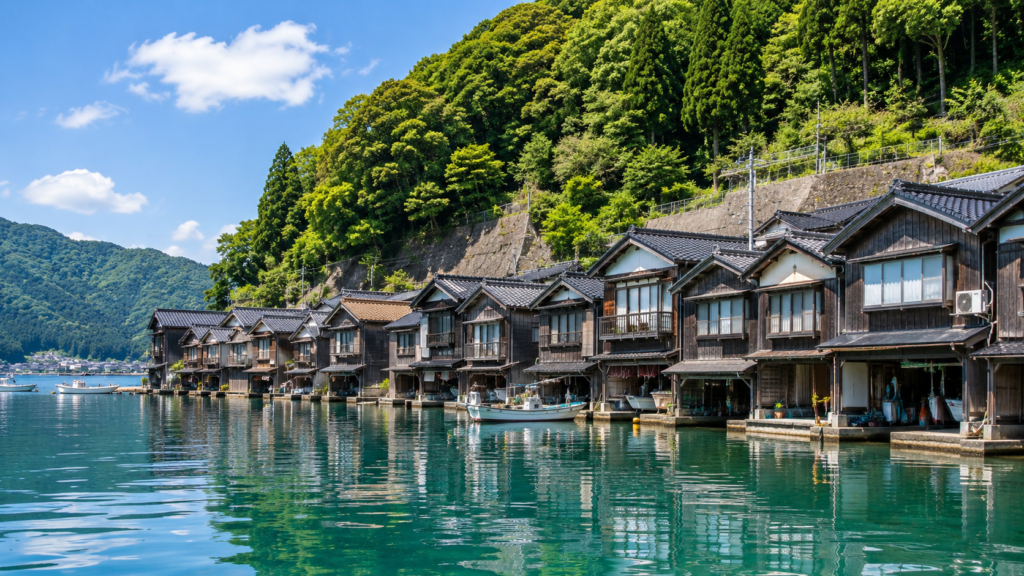
Along the coast of northern Kyoto Prefecture lies Ine, a quiet fishing village known for its unique waterfront houses called funaya.
These traditional wooden buildings sit directly along the water, with boat garages on the lower level and living spaces above.
The village stretches around the calm waters of Ine Bay, creating a peaceful landscape that feels far removed from the busy streets of central Kyoto.
Walking along the waterfront or viewing the village from the sea offers a glimpse into a traditional coastal lifestyle that has survived for generations.
Best for: Coastal scenery and traditional fishing culture
Best season: Spring to autumn
Hidden Japan pick: ★★★★★
Want to visit Ine without worrying about transportation?
Explore Ine’s famous boathouses, Amanohashidate, and the scenic Tango Railway on a convenient day trip from Osaka.
👉 Check the Ine & Amanohashidate Day Tour
3. Miyama — Kyoto
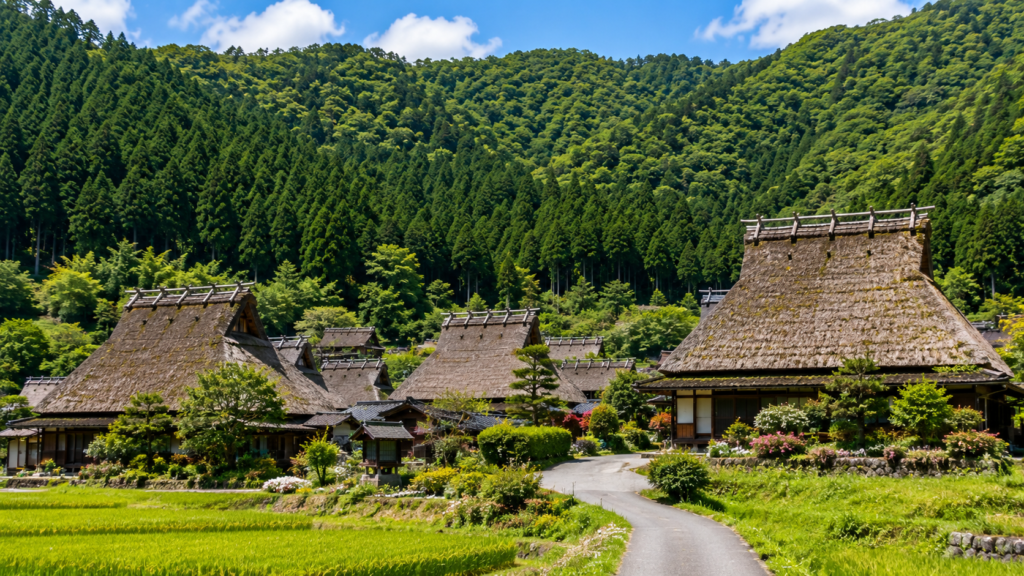
Miyama is a peaceful mountain community north of Kyoto known for its traditional thatched-roof houses.
The small village of Kayabuki no Sato is especially beautiful, with historic homes surrounded by rice fields, forests, and mountains.
Unlike Kyoto’s busiest sightseeing districts, Miyama offers a much slower experience where visitors can enjoy rural scenery and traditional Japanese architecture.
Each season creates a different atmosphere, from green rice fields in summer to snow-covered rooftops in winter.
Best for: Rural Japan and thatched-roof houses
Best season: Winter and early summer
Hidden Japan pick: ★★★★★
4. Ouchi-juku — Fukushima
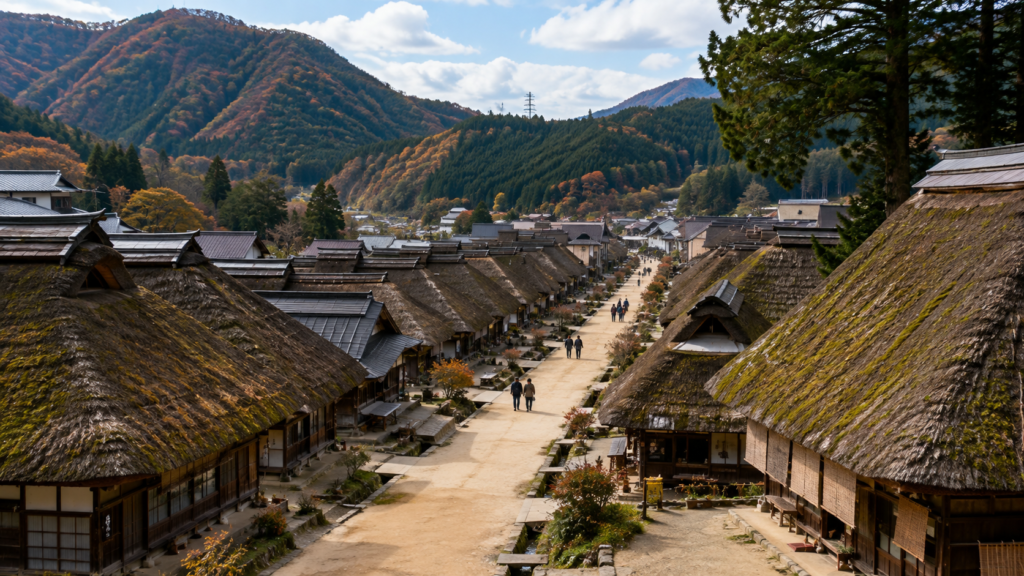
Ouchi-juku is a beautifully preserved former post town in the mountains of Fukushima Prefecture.
During the Edo period, travelers passed through this settlement while journeying between regions, and today its main street is still lined with traditional thatched-roof buildings.
The absence of modern-looking buildings along much of the historic street gives Ouchi-juku a remarkably nostalgic atmosphere.
Winter is particularly impressive when deep snow covers the roofs and surrounding mountains.
Best for: Edo-period atmosphere and historic streets
Best season: Winter and autumn
Hidden Japan pick: ★★★★★
5. Tsumago-juku — Nagano
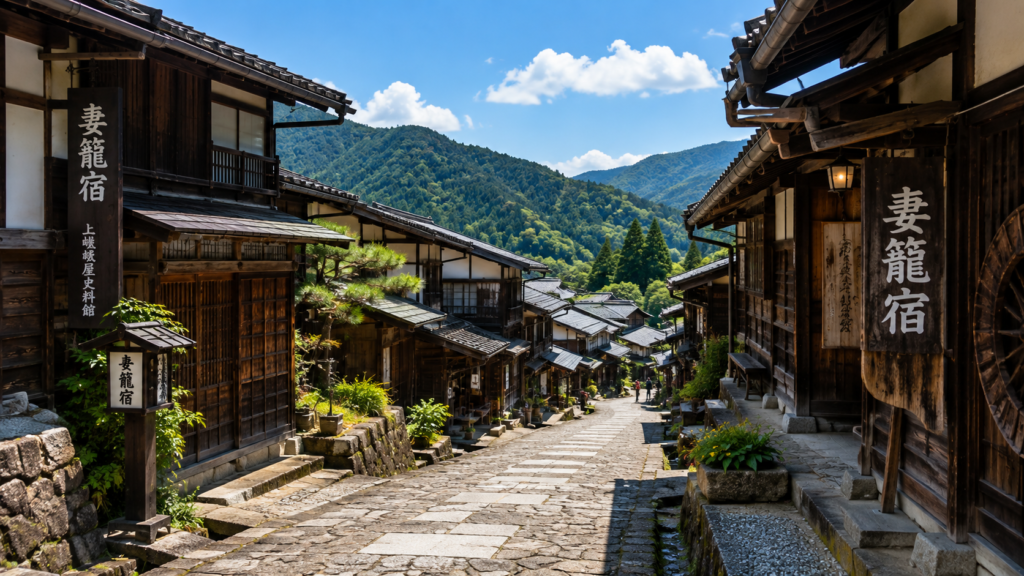
Tsumago-juku is one of the best-preserved post towns along the historic Nakasendo route.
Wooden buildings line the old street, creating a landscape that offers a glimpse of what travel through Japan may have looked like centuries ago.
Modern visual distractions have been carefully limited, helping preserve the historic character of the town.
Tsumago is also a popular stop for travelers walking part of the old Nakasendo trail between Tsumago and Magome.
Best for: Historic streets and walking the Nakasendo
Best season: Spring and autumn
Hidden Japan pick: ★★★★★
6. Magome-juku — Gifu
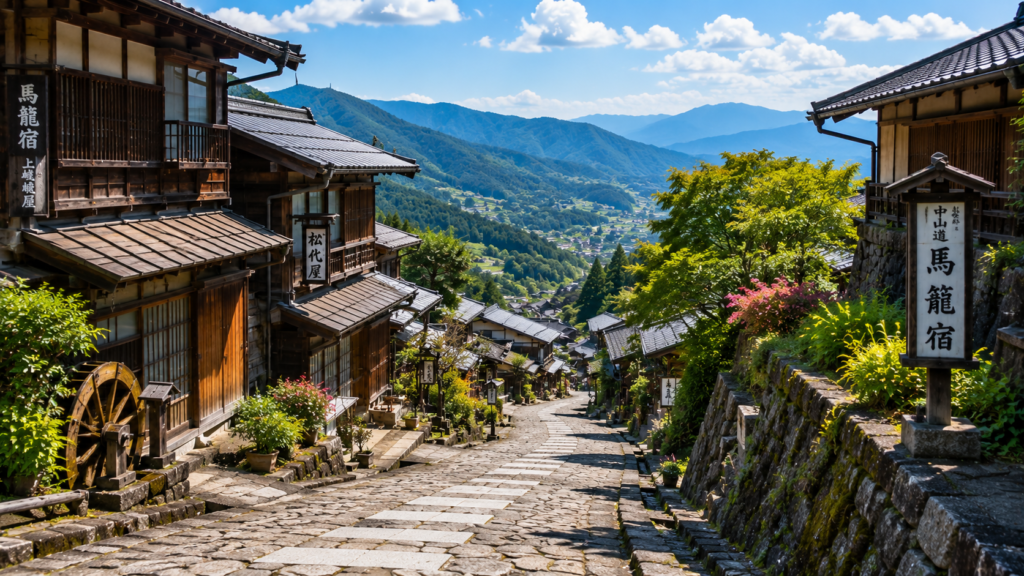
Magome-juku is another historic post town along the Nakasendo route.
Unlike the relatively flat streets of some traditional towns, Magome is built along a sloping stone-paved road surrounded by wooden buildings.
From higher points in the village, visitors can enjoy views across the surrounding mountains and countryside.
Combining Magome with the walking trail to Tsumago is one of the best ways to experience the historic Nakasendo region.
Best for: Mountain views and historic walking routes
Best season: Spring and autumn
Hidden Japan pick: ★★★★☆
Want to walk the historic Nakasendo Trail?
Explore the beautifully preserved post towns of the Nakasendo on a guided day trip through the Kiso Valley.
👉 Check the Nakasendo Walking Tour
7. Ainokura — Toyama
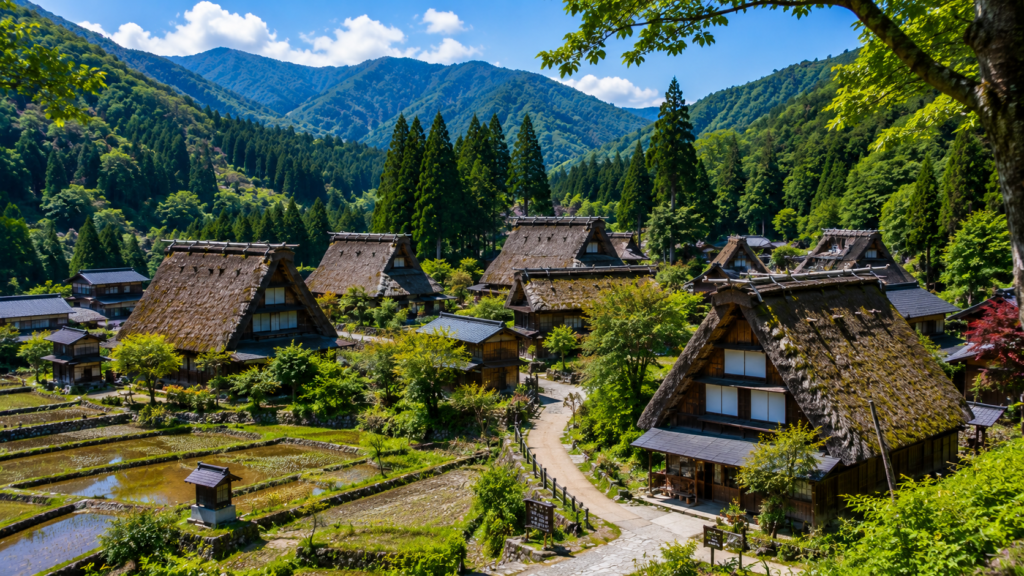
Ainokura is a small traditional village in the mountains of Toyama Prefecture and part of the Historic Villages of Shirakawa-go and Gokayama UNESCO World Heritage Site.
Like Shirakawa-go, the village is known for its distinctive gassho-zukuri houses.
However, Ainokura is smaller and often feels quieter, making it particularly attractive to travelers looking for a more peaceful rural experience.
Surrounded by steep mountains and forests, the village feels especially atmospheric during winter.
Best for: Quiet traditional scenery and gassho-zukuri houses
Best season: Winter and autumn
Hidden Japan pick: ★★★★★
8. Taketomi Island — Okinawa
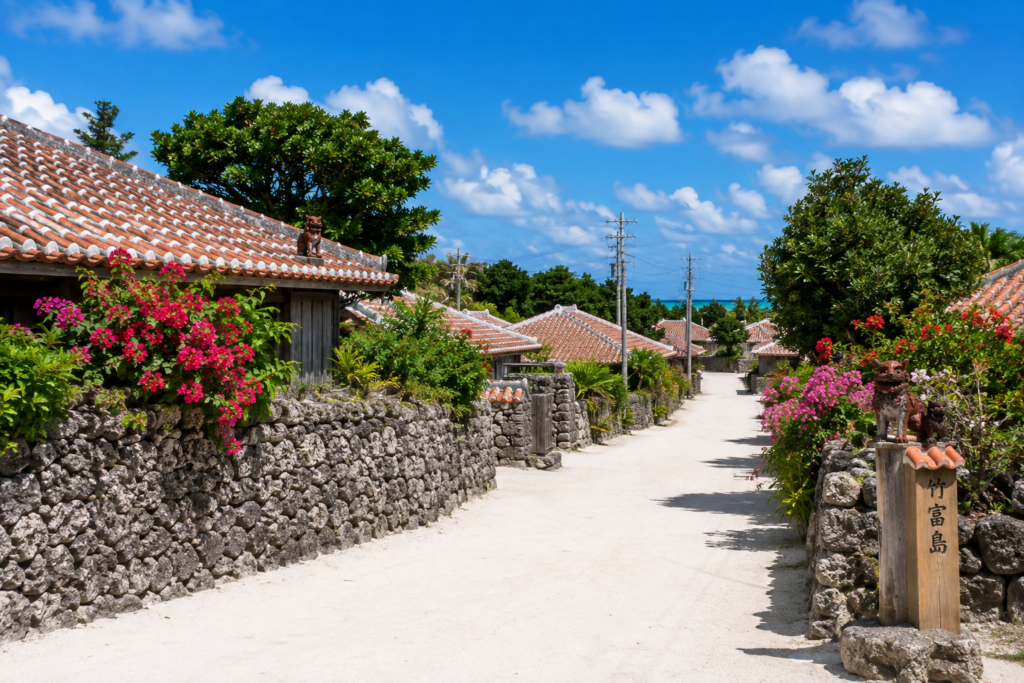
Taketomi Island offers a completely different image of traditional Japan.
Instead of mountain villages and thatched farmhouses, you’ll find traditional Okinawan homes with red-tiled roofs, stone walls, sandy streets, and tropical vegetation.
The small island can be explored slowly on foot or by bicycle, making it ideal for travelers who want to experience the relaxed atmosphere of the Yaeyama Islands.
Its architecture and landscape reveal another side of Japan’s regional culture.
Best for: Traditional Okinawan scenery and island atmosphere
Best season: Spring and autumn
Hidden Japan pick: ★★★★★
9. Hoshino Village — Fukuoka
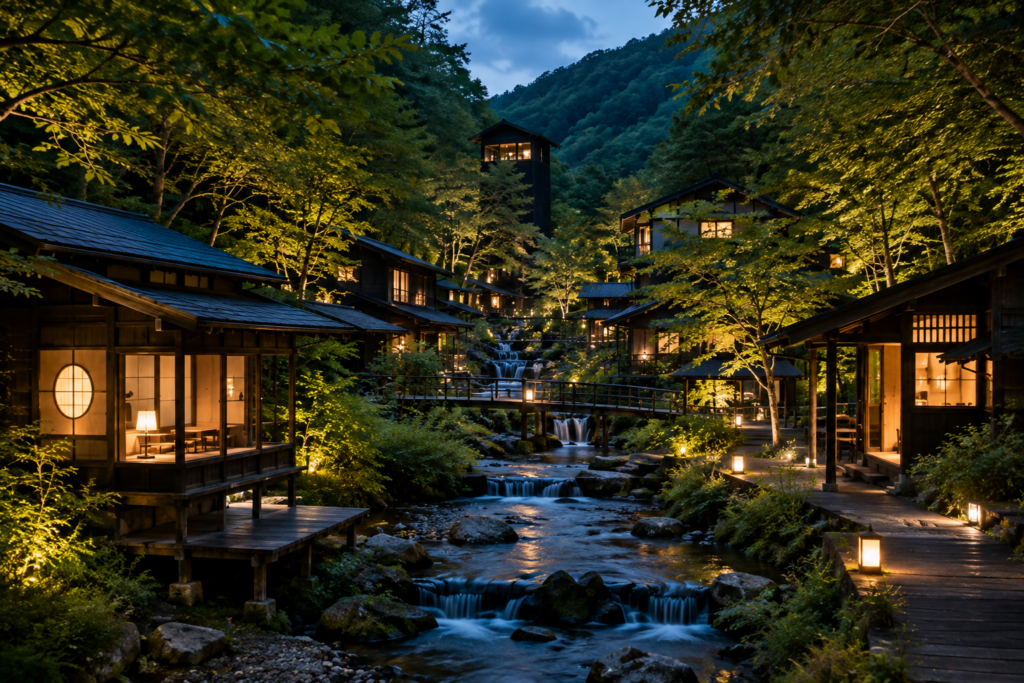
Hoshino Village lies among the green mountains of Fukuoka Prefecture and is known for its peaceful rural landscapes and tea-growing culture.
Terraced fields, forests, and small communities create a very different atmosphere from Japan’s major urban destinations.
The area is particularly suited to travelers interested in slow travel, countryside scenery, and discovering places that receive fewer international visitors.
At night, the relatively dark skies also make the area known for stargazing.
Best for: Tea landscapes, countryside and stargazing
Best season: Spring to autumn
Hidden Japan pick: ★★★★☆
10. Narai-juku — Nagano
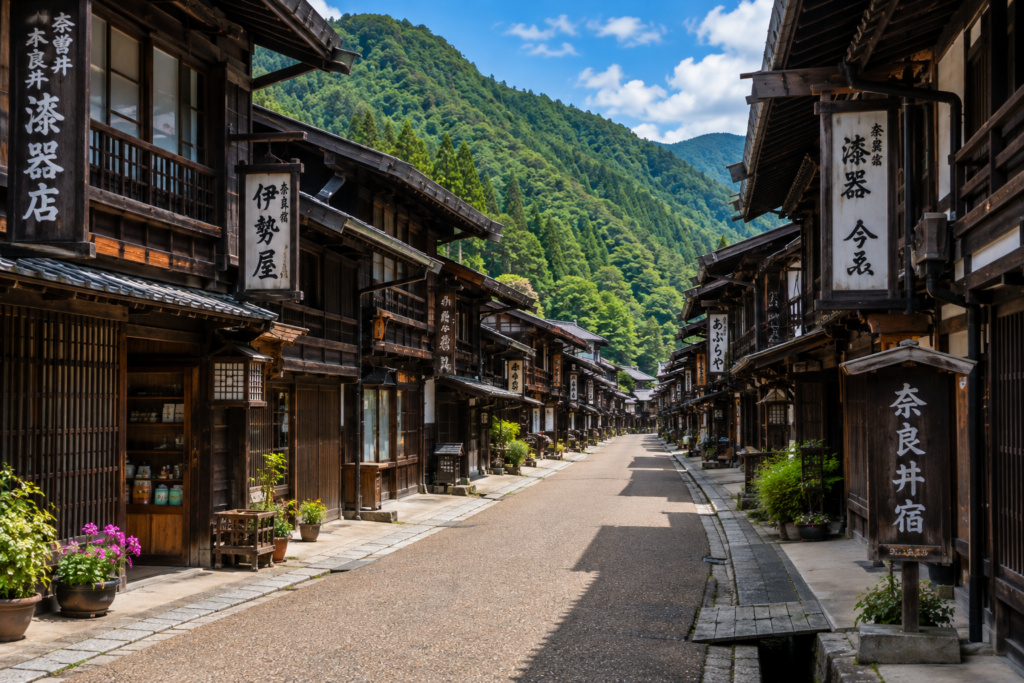
Narai-juku is one of the longest and best-preserved post towns along the historic Nakasendo route.
Traditional wooden buildings stretch along the old road, creating an impressive historic streetscape surrounded by the mountains of Nagano Prefecture.
Once an important stop for travelers crossing the difficult Torii Pass, Narai became known as one of the most prosperous post towns along the route.
Today, visitors can wander through its historic streets, explore traditional shops, and experience the atmosphere of old Japan at a relaxed pace.
Best for: Historic architecture and traditional streets
Best season: Spring and autumn
Hidden Japan pick: ★★★★★
Which Hidden Village Should You Visit?
For first-time visitors:Shirakawa-go
For fewer crowds:Ainokura
For coastal scenery:Ine
For traditional rural Japan:Miyama
For historic streets:Tsumago-juku or Narai-juku
For tropical Japan:Taketomi Island
For winter scenery:Shirakawa-go or Ouchi-juku
Best Time to Visit Japan’s Traditional Villages
Japan’s traditional villages can be visited throughout the year, but each season creates a very different experience.
Spring brings fresh greenery and cherry blossoms to many rural regions.
Summer is ideal for green rice fields, mountain landscapes, and exploring cooler countryside destinations.
Autumn is one of the most beautiful seasons, when mountains and forests turn red, orange, and yellow.
Winter transforms places such as Shirakawa-go, Ainokura, Miyama, and Ouchi-juku into dramatic snow-covered landscapes.
The best season ultimately depends on the scenery and experience you want.
How to Visit Hidden Villages in Japan
Many of Japan’s traditional villages are located away from major railway lines.
Some destinations, such as Tsumago and Magome, can be incorporated into train-and-bus itineraries, while more remote villages may require additional bus connections or a rental car.
If you plan to visit several countryside destinations, always check transportation schedules in advance because rural buses may operate less frequently than transportation in major cities.For travelers with limited time, staying overnight near a traditional village can also make the journey much more relaxed.
FAQ
What is the most famous traditional village in Japan?
Shirakawa-go is probably the best-known traditional village among international visitors, particularly because of its distinctive gassho-zukuri houses and mountain scenery.
Is Shirakawa-go worth visiting?
Yes. Its historic architecture and dramatic seasonal landscapes make it one of Japan’s most distinctive rural destinations.
Are there villages like Shirakawa-go with fewer tourists?
Ainokura in the Gokayama area is an excellent alternative for travelers looking for gassho-zukuri architecture in a smaller, quieter setting.
What is the best traditional village near Kyoto?
Ine and Miyama are two excellent options. Ine offers coastal fishing-village scenery, while Miyama is known for rural landscapes and traditional thatched-roof houses.
Can I visit these villages as day trips?
Some can be visited as day trips from nearby cities, but travel times vary considerably. More remote destinations are often better enjoyed with an overnight stay.
Shirakawa-go, Ainokura, Miyama, and Ouchi-juku are particularly beautiful when covered in snow.
Final Thoughts: Discover Rural Japan
Japan’s biggest cities are unforgettable, but they represent only one side of the country.
Traditional fishing communities, mountain settlements, old post towns, and remote island villages reveal a slower and more intimate side of Japan.
Whether you choose the famous landscapes of Shirakawa-go, the waterfront houses of Ine, or the quiet streets of Ainokura, exploring beyond the major tourist route can become one of the most memorable parts of a trip to Japan.
Save this guide and start planning your journey beyond Japan’s usual tourist trail.


コメント