
- Introduction
- 1. Amano Iwato Shrine — Miyazaki
- 2. Takachiho Shrine — Miyazaki
- 3. Udo Jingu — Miyazaki
- 4. Motonosumi Shrine — Yamaguchi
- 5. Kumano Hongu Taisha — Wakayama
- 6. Kumano Nachi Taisha — Wakayama
- 7. Kirishima Jingu — Kagoshima
- 8. Hie Shrine — Tokyo
- 9. Amano Yasukawara — Miyazaki
- 10. Oyunohara — Wakayama
- Final Thoughts
Introduction
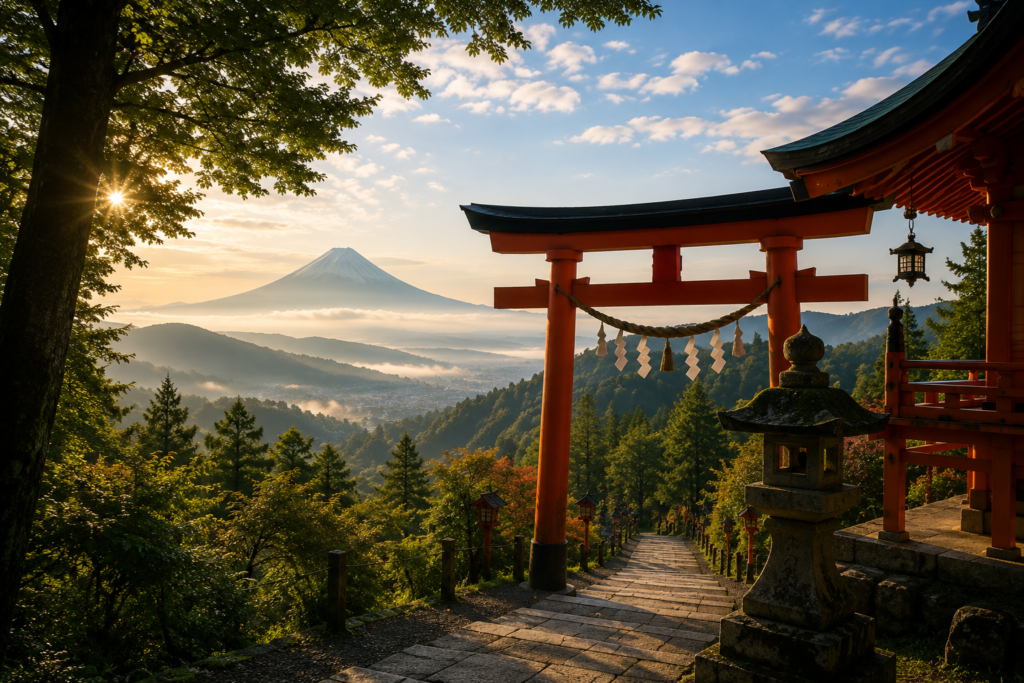
Japan is home to thousands of Shinto shrines, from famous landmarks in Tokyo and Kyoto to sacred places hidden among mountains, forests, caves, and dramatic coastlines.
If you want to experience a quieter and more spiritual side of Japan, these shrines are worth adding to your itinerary.
Here are 10 beautiful sacred places in Japan that offer unforgettable scenery, fascinating mythology, and a peaceful escape from the usual tourist trail.
1. Amano Iwato Shrine — Miyazaki
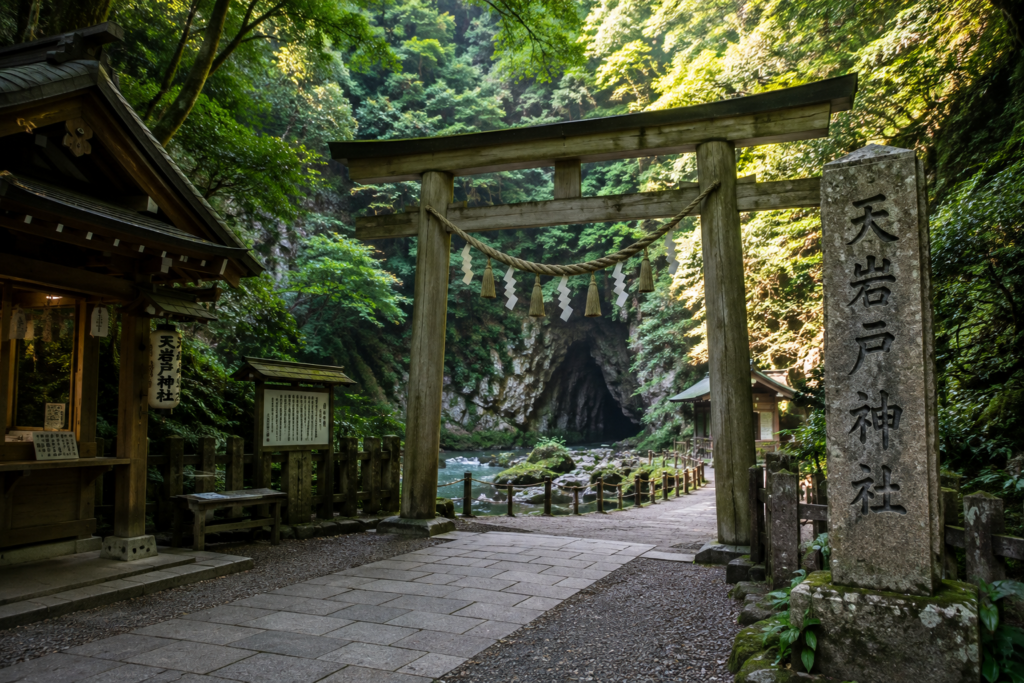
Hidden among the mountains of Takachiho, Amano Iwato Shrine is deeply connected to Japanese mythology. According to legend, the sun goddess Amaterasu hid inside a nearby cave, plunging the world into darkness. Today, visitors can explore the sacred landscape surrounding the shrine and walk toward Amano Yasukawara, a cave beside the river surrounded by countless small stone piles.
Location: Takachiho, Miyazaki Prefecture
Best for: Japanese mythology, forests, sacred atmosphere
Travel tip: Combine your visit with Takachiho Gorge.
2. Takachiho Shrine — Miyazaki
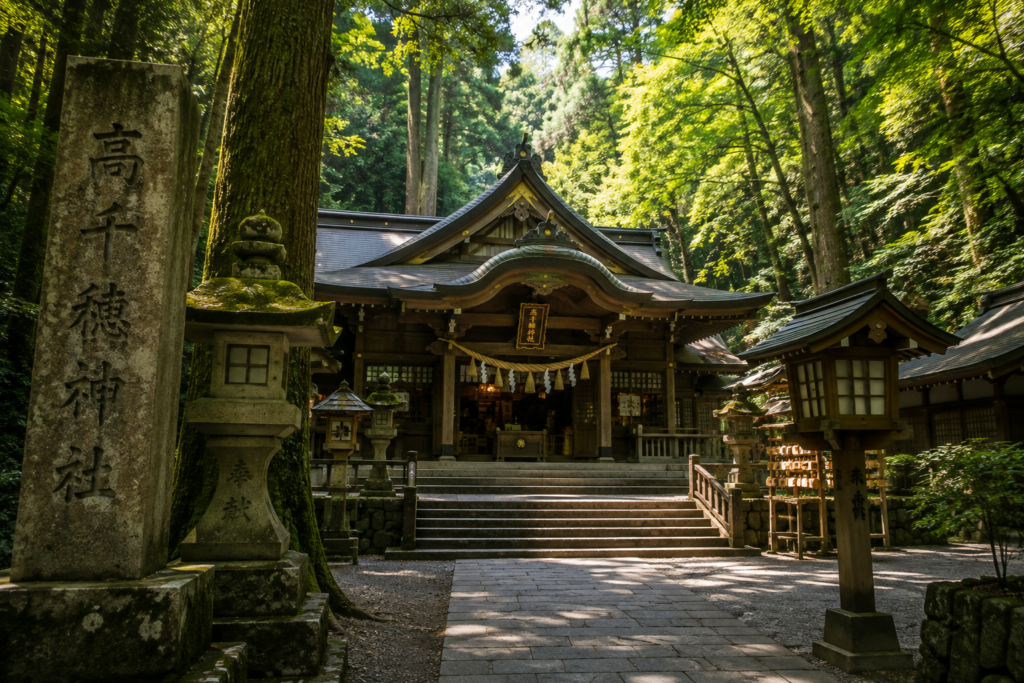
Surrounded by towering cedar trees, Takachiho Shrine feels far removed from Japan’s busy cities. The shrine has deep connections to Japanese mythology and is particularly atmospheric in the evening, when traditional kagura performances bring ancient legends to life.
Location: Takachiho, Miyazaki Prefecture
Best for: Ancient mythology, cedar forests, traditional culture
Travel tip: Stay overnight in Takachiho to experience the evening kagura performance.
3. Udo Jingu — Miyazaki
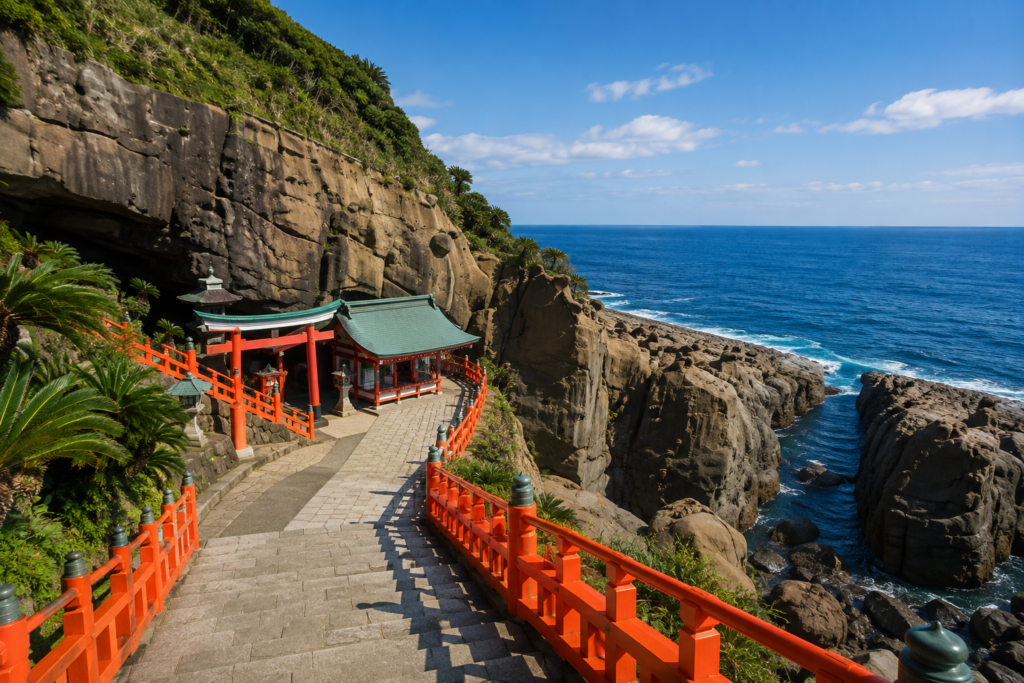
Built into a seaside cave overlooking the Pacific Ocean, Udo Jingu is one of Japan’s most unusual shrine settings. Visitors descend along the dramatic coastline before reaching the colorful shrine buildings inside the cave. The combination of ocean cliffs, red shrine architecture, and sacred caves makes this an unforgettable stop on a trip through southern Japan.
Location: Nichinan, Miyazaki Prefecture
Best for: Ocean views, caves, photography
Travel tip: A rental car makes exploring this part of Miyazaki much easier.
4. Motonosumi Shrine — Yamaguchi
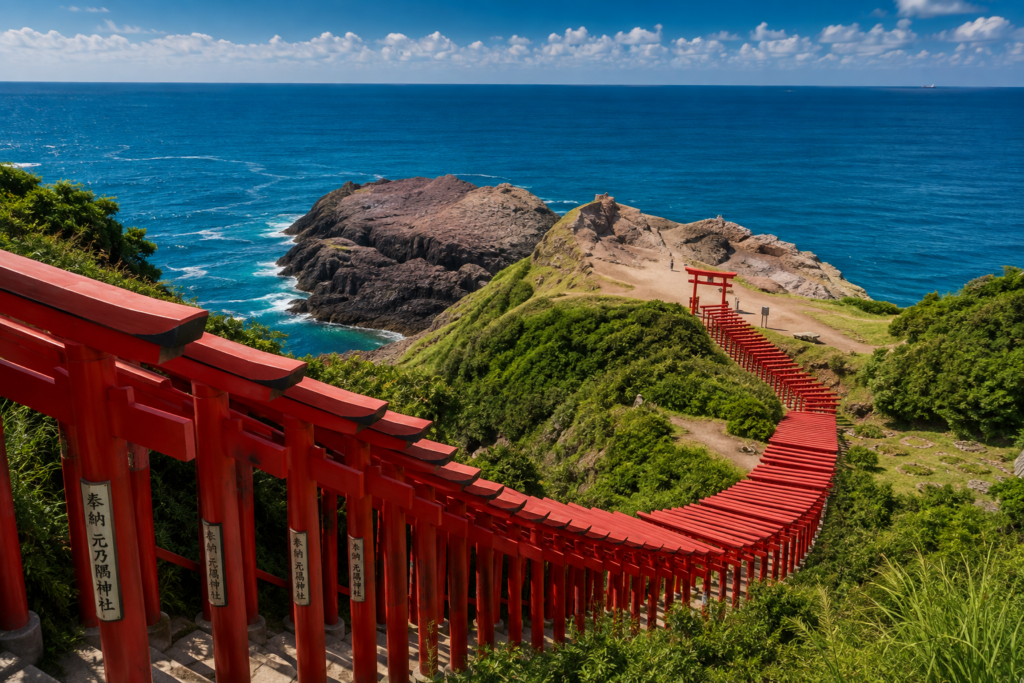
Rows of bright red torii gates stretch across a dramatic clifftop overlooking the Sea of Japan at Motonosumi Shrine. The contrast between the red gates, green landscape, and deep blue ocean makes this one of the most photogenic shrine landscapes in western Japan.
Location: Nagato, Yamaguchi Prefecture
Best for: Torii gates, ocean scenery, photography
Travel tip: Visit on a clear day for the most impressive coastal views.
5. Kumano Hongu Taisha — Wakayama
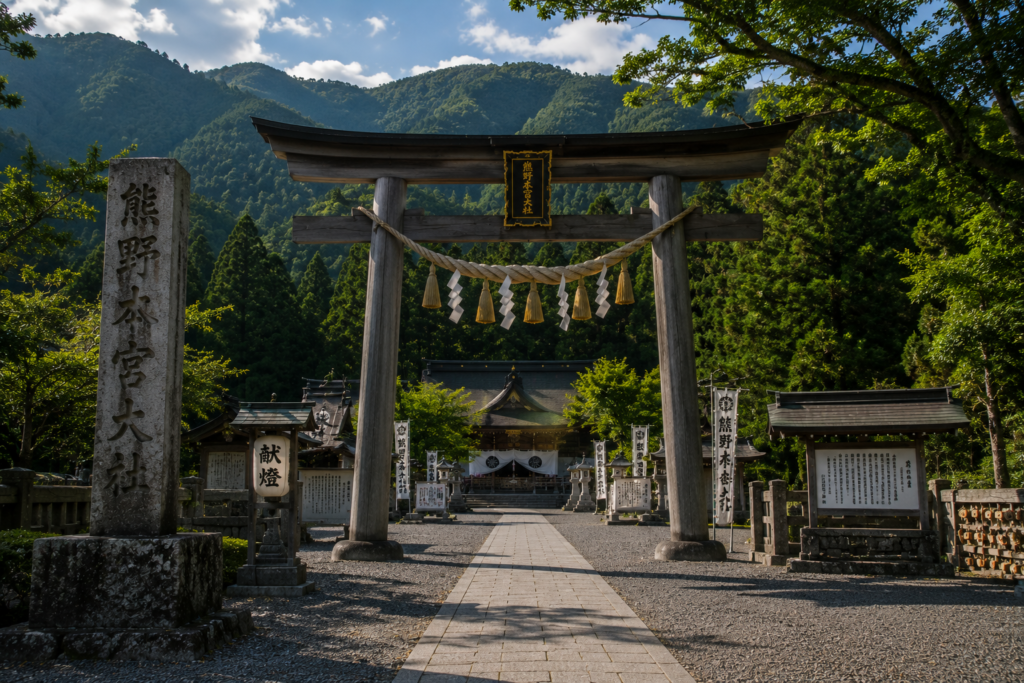
Deep in the mountains of the Kii Peninsula lies Kumano Hongu Taisha, one of the three sacred Kumano shrines. For centuries, pilgrims traveled through the forests along the Kumano Kodo pilgrimage routes to reach this spiritual destination. Unlike many bright red shrines, its traditional wooden architecture blends beautifully into the surrounding forest.
Location: Tanabe, Wakayama Prefecture
Best for: Pilgrimage routes, history, forests
Travel tip: Walk part of the Kumano Kodo before visiting the shrine.
6. Kumano Nachi Taisha — Wakayama
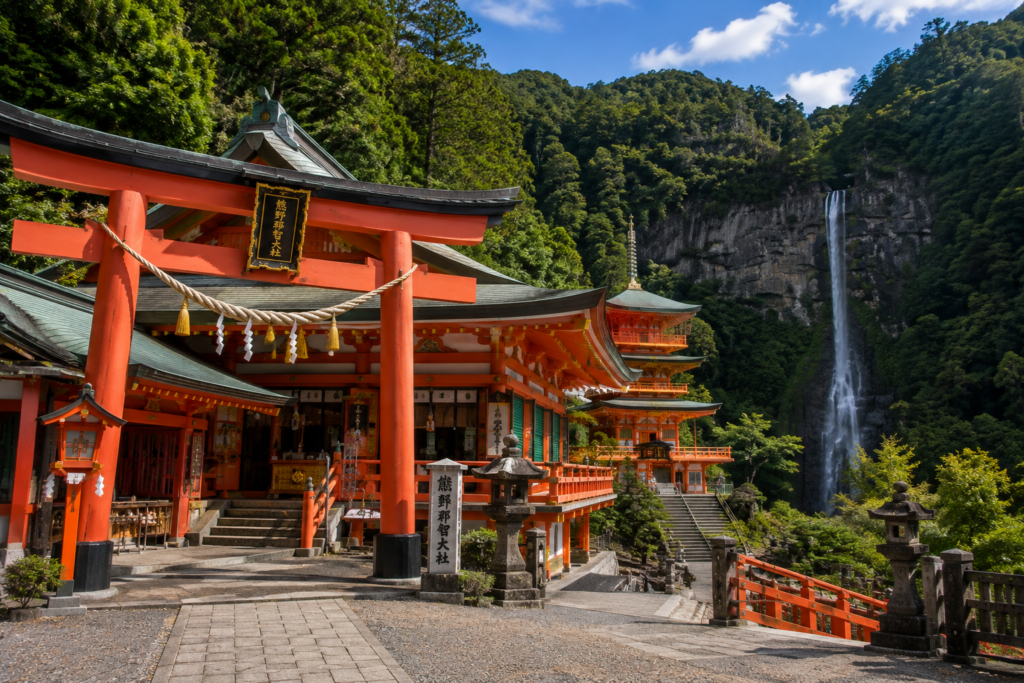
Kumano Nachi Taisha sits high in the mountains near one of Japan’s most spectacular waterfalls. The journey to the shrine can include the ancient stone staircase of Daimonzaka, surrounded by towering cedar trees. Together with nearby Nachi Falls and Seigantoji Temple, the area creates one of Japan’s most memorable spiritual landscapes.
Location: Nachikatsuura, Wakayama Prefecture
Best for: Waterfalls, pilgrimage, mountain scenery
Travel tip: Start from Daimonzaka if you want to experience part of the traditional pilgrimage approach.
7. Kirishima Jingu — Kagoshima
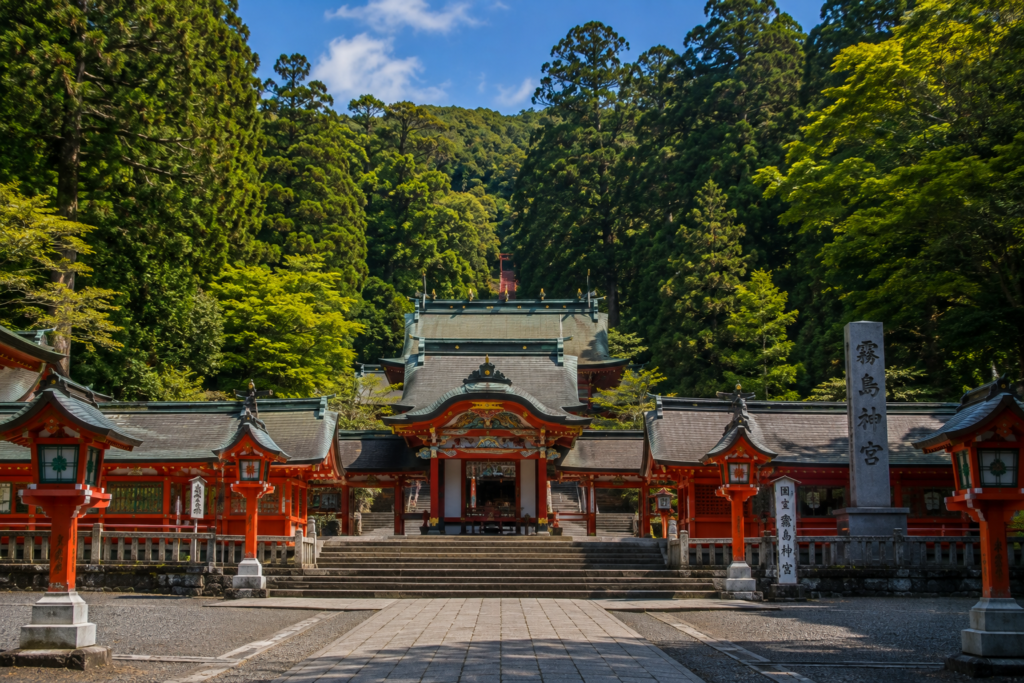
Located in the mountains of southern Kyushu, Kirishima Jingu is surrounded by dense forest and volcanic landscapes. The shrine is associated with Ninigi no Mikoto, an important figure in Japanese mythology, and its brilliant shrine buildings stand out beautifully against the surrounding greenery.
Location: Kirishima, Kagoshima Prefecture
Best for: Mountains, mythology, nature
Travel tip: Combine your visit with Kirishima Onsen.
8. Hie Shrine — Tokyo
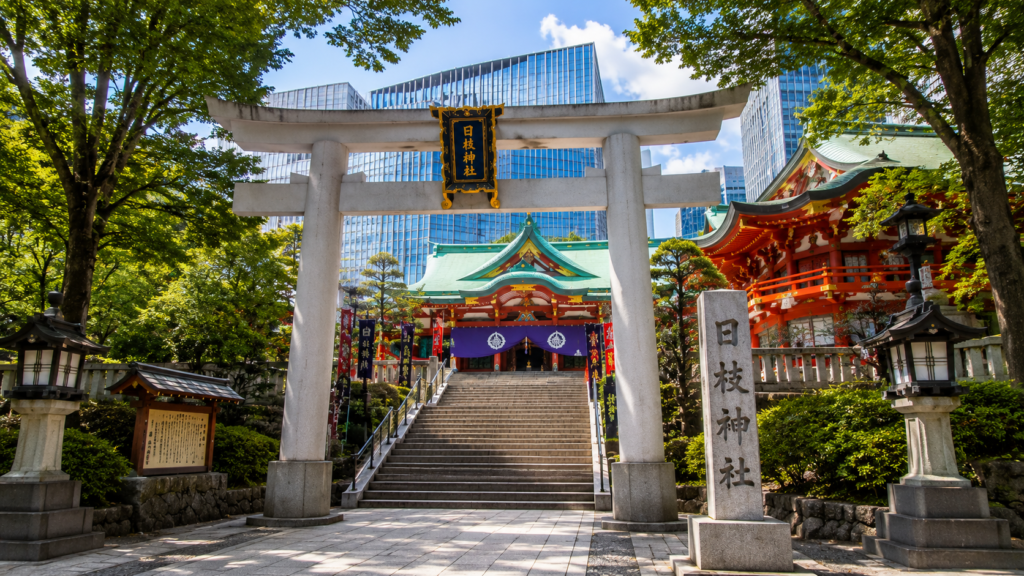
Hidden among the modern buildings of central Tokyo, Hie Shrine offers an unexpected escape from the city. One of its most photogenic features is the staircase lined with vivid red torii gates. Despite being located near some of Tokyo’s busiest districts, the shrine provides a surprisingly peaceful atmosphere.
Location: Chiyoda, Tokyo
Best for: Torii gates, Tokyo sightseeing, photography
Travel tip: Visit early in the morning for a quieter experience.
9. Amano Yasukawara — Miyazaki
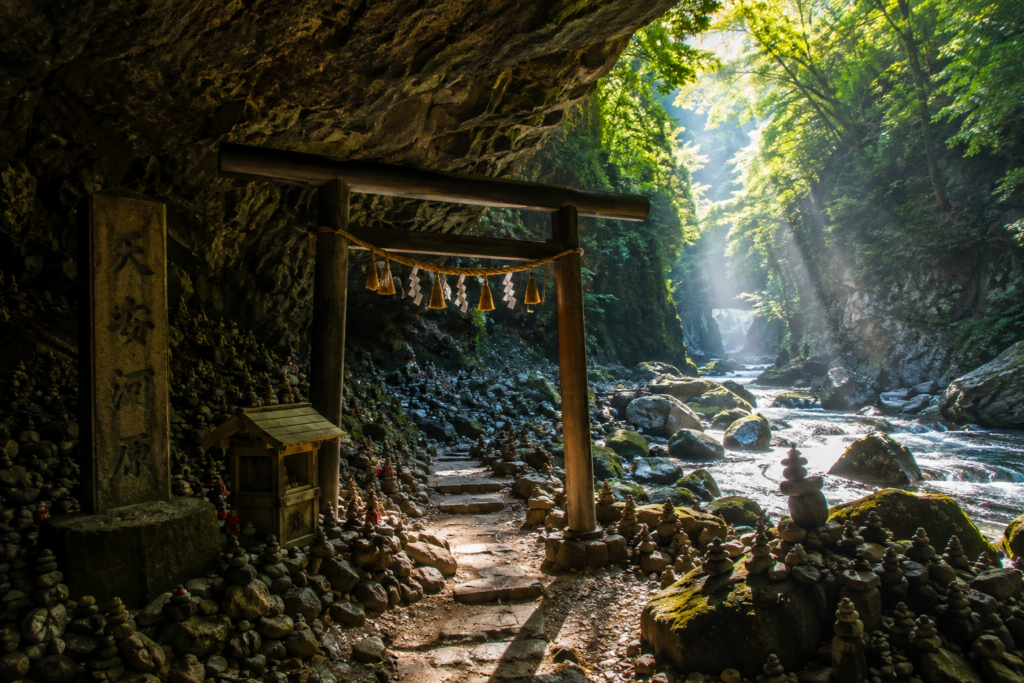
A short walk from Amano Iwato Shrine leads through a beautiful river gorge to Amano Yasukawara. This sacred cave is associated with the famous legend of Amaterasu and is surrounded by countless small stone piles left throughout the area. Walking through the forest and along the river to reach the cave is part of the experience.
Location: Takachiho, Miyazaki Prefecture
Best for: Sacred caves, mythology, atmospheric photography
Travel tip: Visit together with Amano Iwato Shrine.
10. Oyunohara — Wakayama
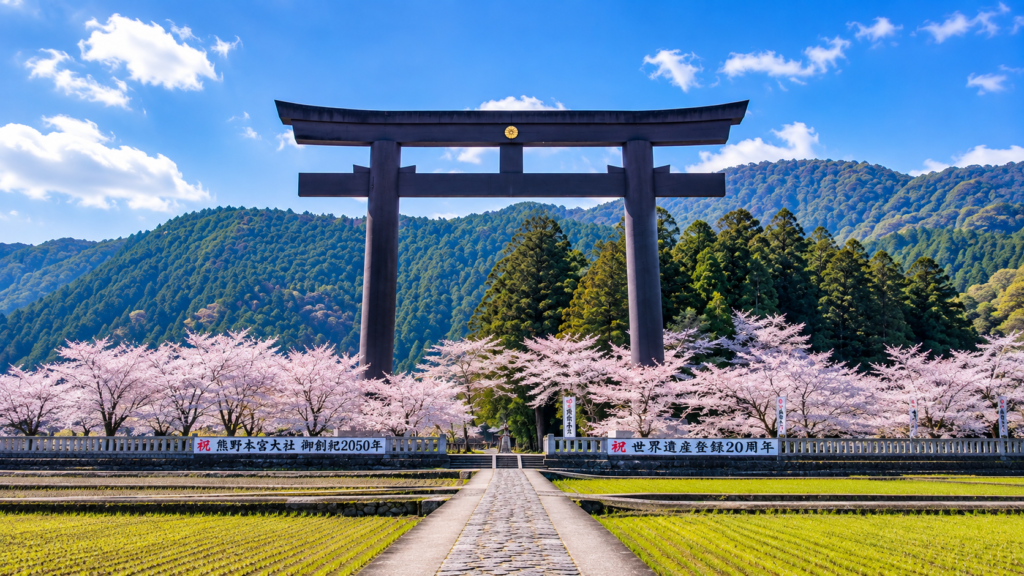
Oyunohara was the original site of Kumano Hongu Taisha and remains one of the most atmospheric sacred places in the Kumano region. Today, visitors enter the area beneath an enormous torii gate rising above the surrounding landscape. It is a powerful final stop for travelers exploring the ancient Kumano Kodo pilgrimage routes.
Location: Hongu, Wakayama Prefecture
Best for: Sacred landscapes, pilgrimage history, photography
Travel tip: Visit both Oyunohara and the present-day Kumano Hongu Taisha.
Final Thoughts
Japan’s most memorable sacred places are not always found on the busiest tourist routes. From sacred caves in Takachiho to ancient pilgrimage trails in Wakayama and dramatic coastal torii gates in Yamaguchi, these places reveal a quieter and more mysterious side of Japan.
If you’re planning a trip beyond Tokyo and Kyoto, save these destinations for your next journey through Japan.
Explore more of Hidden Japan:
Hidden Shrines | Japanese Gardens | Hot Springs | Kyoto Travel | Traditional Japan
コメント